Cargo Handling Simulator Course in Mumbai
Develop practical cargo-operation skills with the Cargo Handling Simulator Course in Mumbai at AIMS Maritime. Through realistic simulator exercises, participants learn about cargo planning, loading and discharge, equipment operation, monitoring, stability considerations and emergency response.
The program helps maritime professionals connect technical knowledge with operational decisions. Training focuses on safe working practices, risk assessment and communication between the deck team and cargo personnel.
Course at a Glance
| Course detail | Information |
|---|---|
| Course name | Cargo Handling Simulator Course |
| Training provider | AIMS Maritime |
| Location | Mumbai, India |
| Training method | Simulator-based learning |
| Core subjects | Cargo planning, equipment operation, loading, discharge and monitoring |
| Safety topics | Stability considerations, risk assessment and emergency response |
| Intended participants | Deck cadets, deck officers, Chief Officers, Masters and cargo personnel |
| Duration and batch dates | Contact AIMS Maritime |
What Is a Cargo Handling Simulator Course?
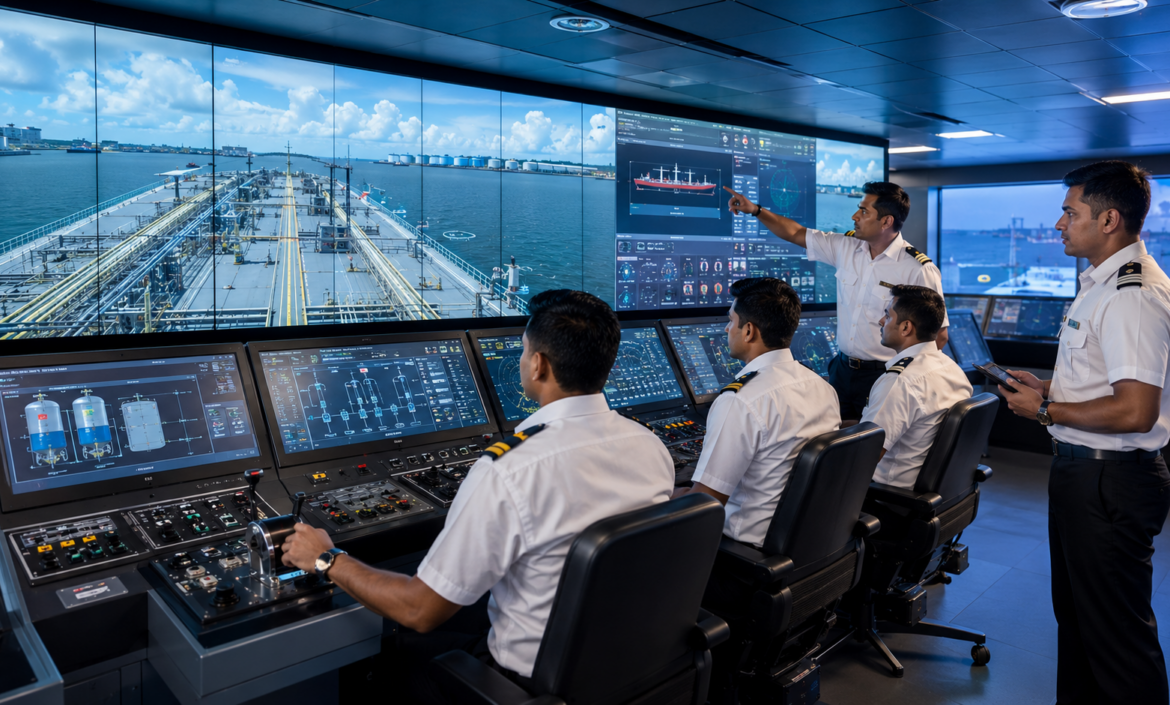
A Cargo Handling Simulator Course uses simulation technology to teach shipboard cargo operations. Participants practise planning activities, operating cargo systems, monitoring progress and responding to operational challenges in a controlled training environment.
The course develops practical understanding of how equipment, procedures, safety considerations and team communication work together during cargo handling.
Course Overview
Effective cargo operations depend on preparation, technical understanding and coordination. Personnel must follow the cargo plan, monitor equipment and operating conditions, and recognise when an operation requires attention.
At AIMS Maritime, simulator-based learning brings these responsibilities together through realistic cargo scenarios. Participants explore loading and discharge processes, equipment operation, cargo monitoring and the decisions needed when conditions change.
The syllabus also introduces tanker and bulk cargo operations, cargo securing practices and ship stability considerations. Candidates can confirm the vessel types and exercises covered by the selected simulator programme before enrolment.
What You Will Learn
Cargo Planning and Management
Understand how planning supports safe and organised cargo operations.
Topics include:
- Principles of shipboard cargo handling
- Preparation for cargo operations
- Cargo planning and management procedures
- Organisation of loading and discharge activities
- Risk assessment during operational planning
- Coordination between personnel involved in cargo work
Cargo Equipment Operation
Develop familiarity with cargo-handling equipment and its role in the simulated operation.
Topics include:
- Functions of cargo-handling equipment
- Equipment operation within simulator exercises
- Interaction between cargo systems
- Monitoring equipment performance
- Recognising operational problems
- Applying safe operating procedures
Loading and Discharge Procedures
Practise the sequence of activities involved in loading and unloading cargo.
Topics include:
- Preparation for loading and discharge
- Following planned operational sequences
- Monitoring cargo movement
- Coordinating equipment and personnel
- Recognising changes in operating conditions
- Responding to interruptions and operational challenges
Cargo Monitoring and Control
Learn how monitoring supports timely decisions throughout a cargo operation.
Topics include:
- Cargo monitoring systems
- Control-system awareness
- Understanding operational information
- Tracking progress against the cargo plan
- Identifying abnormal conditions
- Communicating observations and concerns
Ship Stability and Cargo Safety
Understand why stability considerations form part of cargo planning and handling.
Topics include:
- Ship stability considerations during cargo operations
- Relationship between cargo distribution and vessel condition
- Safety awareness during loading and discharge
- Cargo securing principles
- Safe cargo-handling practices
- Recognising risks that require further assessment
Tanker and Bulk Cargo Operations Overview
Gain an introduction to different cargo-operation environments.
Topics include:
- Overview of tanker cargo operations
- Overview of bulk cargo operations
- Differences in handling arrangements
- Cargo-specific operational considerations
- Equipment and monitoring awareness
- Importance of procedures suited to the vessel and cargo
Teamwork and Communication
Practise the coordination needed between the deck team and cargo personnel.
Topics include:
- Communication during cargo activities
- Understanding assigned responsibilities
- Sharing operational information
- Reporting changes and concerns
- Coordinating responses to problems
- Supporting informed team decisions
Risk Assessment and Emergency Response
Develop awareness of cargo-related hazards and practise responding to simulated operational challenges.
Topics include:
- Identifying potential cargo-operation risks
- Applying safe working procedures
- Recognising developing problems
- Assessing emergency situations
- Choosing responses within the exercise procedures
- Communicating during cargo-related emergencies
Course Objectives
On completion of the training, participants should be better able to:
- Explain the main principles of cargo handling.
- Understand cargo planning and management procedures.
- Operate cargo systems within simulator exercises.
- Apply loading and discharge procedures.
- Monitor cargo operations and identify changes.
- Recognise relevant stability and securing considerations.
- Assess operational risks.
- Communicate effectively with cargo personnel.
- Make informed decisions during simulated challenges.
- Respond to cargo-related emergencies with greater awareness.
Why Is Cargo Handling Simulator Training Useful?
Simulator training allows participants to practise cargo activities without conducting the exercise on an operating vessel. It provides a controlled setting for observing system behaviour, recognising problems and exploring the consequences of operational decisions.
This helps participants connect procedures with practical situations. They can develop their understanding of equipment use, cargo monitoring and teamwork while preparing for onboard responsibilities.
Who Should Attend?
The course is suitable for maritime personnel seeking practical cargo-operation knowledge, including:
- Deck Cadets
- Junior Deck Officers
- Officers in Charge of a Navigational Watch (OICNW)
- Chief Officers
- Masters
- Marine professionals involved in cargo operations
- Personnel seeking to strengthen cargo-handling skills
Contact AIMS Maritime to confirm entry requirements and select training appropriate to your experience and intended duties.
Why Choose AIMS Maritime?
AIMS Maritime provides professional maritime training focused on practical understanding, operational safety and the responsibilities of seafarers.
The Cargo Handling Simulator Course combines realistic exercises with guidance from experienced maritime instructors. Participants develop their understanding of cargo systems while practising the communication and decision-making required during operations.
Training features include:
- Practical simulator-based learning
- Experienced maritime instructors
- Industry-focused course content
- Coverage of cargo planning, monitoring and safety
- Emphasis on teamwork and operational decisions
- A professional maritime training environment
Course Duration and Registration
Contact AIMS Maritime for the current course duration, upcoming batches and daily timings.
Before enrolling, confirm the simulator programme’s vessel and cargo coverage, entry requirements, assessment method, certificate details, fees and required documents.
Frequently Asked Questions
What does the Cargo Handling Simulator Course cover?
The course covers cargo planning, equipment operation, loading and discharge, cargo monitoring, stability considerations, securing practices, teamwork, risk assessment and emergency response.
Who can join the course?
The programme is suitable for deck cadets, deck officers, Chief Officers, Masters and maritime professionals involved in cargo operations. AIMS Maritime can confirm suitability based on your experience.
Does the course include practical training?
Yes. Participants practise cargo operations through simulator-based exercises that recreate operational situations in a controlled learning environment.
Are ship stability considerations included?
Yes. The syllabus includes stability considerations related to cargo operations, alongside cargo planning, distribution awareness and safe handling practices.
Does the course cover tanker and bulk cargo operations?
The supplied syllabus includes an overview of tanker and bulk cargo operations. Contact AIMS Maritime to confirm the vessel types and practical scenarios available in your selected programme.
How does this differ from the chemical and gas cargo simulator courses?
This course provides broader cargo-handling coverage. The LCHS Chemical and LCHS Gas Cargo Handling Simulator programmes focus on their respective tanker cargo systems and operations. AIMS Maritime can help you select the appropriate programme.
Does the training include emergency response?
Yes. Emergency response and operational risk assessment are included. Participants practise recognising problems and making decisions during simulated cargo scenarios.
How long is the course?
Contact AIMS Maritime for the current duration and available batch dates.
Where is the course available?
The Cargo Handling Simulator Course is available at AIMS Maritime in Mumbai, India.
How can I register?
Call or email AIMS Maritime to confirm programme coverage, eligibility, availability, fees and registration requirements.
Enquire About the Next Cargo Simulator Batch
Strengthen your understanding of cargo planning, equipment operation, monitoring and safety through practical simulator training at AIMS Maritime.
Contact the training team for course details and upcoming batches.
Call: +91 7710074140
Email: training@aimsmaritimeplus.com
Website: AIMS Maritime