Container Ship Familiarization Training
Understand container vessel operations, cargo-handling procedures and shipboard safety with the Container Ship Familiarization Training in Mumbai at AIMS Maritime.
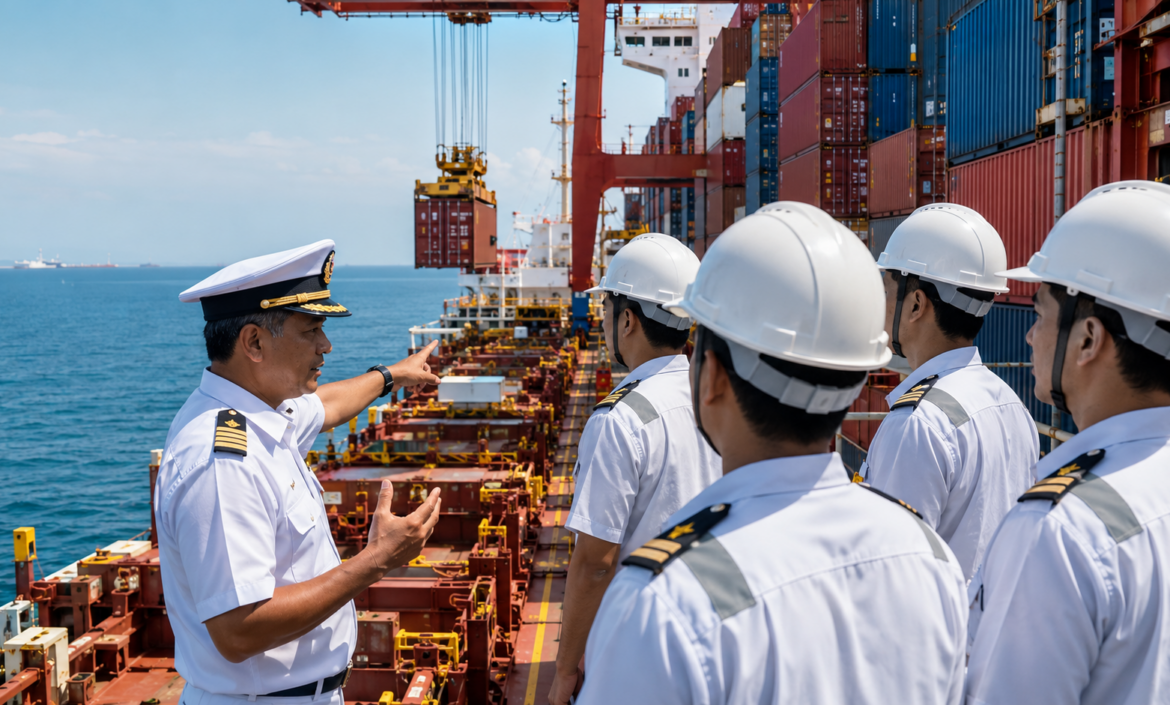
This course provides seafarers with essential knowledge of container ship layout, onboard working areas, container identification, stowage arrangements, cargo securing, lashing equipment, safety procedures and crew responsibilities.
The programme is designed to help participants understand the working environment of a modern container vessel and prepare for their duties with greater confidence, awareness and operational discipline.
What Is Container Ship Familiarization Training?
Container Ship Familiarization Training introduces seafarers to the structure, equipment, cargo operations and safety procedures commonly associated with container vessels.
Participants learn how containers are identified, arranged, loaded, discharged and secured. The training also explains important onboard responsibilities, communication procedures, emergency arrangements and safe working practices in cargo and deck areas.
It is particularly useful for seafarers joining a container vessel for the first time or transitioning from another type of vessel.
Course at a Glance
- Course name: Container Ship Familiarization Training
- Training provider: AIMS Maritime
- Location: CBD Belapur, Navi Mumbai, Maharashtra
- Training focus: Container vessel operations, cargo handling and onboard safety
- Suitable for: Deck cadets, ratings, junior officers and newly joining seafarers
- Course duration: Contact AIMS Maritime for the current schedule
- Registration: Enquire with AIMS Maritime for batch dates and eligibility details
Course Overview
Container ships play an important role in global trade by transporting large quantities of packaged cargo efficiently between ports.
Working onboard a container vessel requires an understanding of the ship’s structure, cargo spaces, deck arrangements, container-securing systems, operational procedures and safety requirements.
The Container Ship Familiarization Training Course at AIMS Maritime gives participants a structured introduction to these important areas. It explains how container ship operations are organised and how different crew members contribute to safe and efficient vessel operations.
Participants also develop awareness of the hazards associated with cargo areas, container handling, lashing operations and movement around the vessel.
The course helps seafarers understand what to expect onboard and how to adapt safely and responsibly to the working environment of a container ship.
Course Objectives
After completing the Container Ship Familiarization Training, participants should be able to:
- Understand the basic design and operational purpose of a container vessel.
- Identify important areas and compartments onboard a container ship.
- Understand the basic sequence of container loading and discharge operations.
- Recognise container identification details and markings.
- Understand basic cargo-planning and stowage principles.
- Identify commonly used container-securing and lashing equipment.
- Follow safe working practices in deck and cargo areas.
- Recognise common hazards associated with container operations.
- Understand the responsibilities of different shipboard departments.
- Follow communication and reporting procedures.
- Respond appropriately to onboard alarms and emergency instructions.
- Adapt more effectively to the working environment of a container vessel.
What You Will Learn
Introduction to Container Ships
Participants receive an overview of container vessels and their role in commercial shipping.
Topics include:
- Introduction to container vessels
- Purpose and function of container ships
- Basic container ship terminology
- Different operational areas onboard
- General vessel organisation
- Overview of routine shipboard activities
Container Ship Design and Layout
Understanding the layout of a container vessel helps crew members move safely and identify important operational areas.
This section covers:
- General container ship arrangement
- Deck and accommodation areas
- Cargo holds and hatch-cover arrangements
- Container bays, rows and tiers
- Machinery and equipment areas
- Restricted and hazardous working areas
- Safe access routes and escape arrangements
Container Identification and Markings
Participants learn how containers are identified and how markings support cargo planning, handling and tracking.
Topics include:
- Container identification numbers
- Basic container markings
- Container types and sizes
- Cargo identification awareness
- Importance of accurate container information
- Recognising visible damage and reporting concerns
Container Loading and Discharge Operations
This section introduces participants to the basic procedures involved when containers are transferred between the vessel and terminal.
Training covers:
- Overview of loading operations
- Overview of discharge operations
- Coordination between vessel and terminal personnel
- Cargo work areas and access control
- Communication during cargo operations
- Monitoring cargo-handling activities
- Recognising unsafe conditions
- Reporting operational concerns
Cargo Planning and Stowage Awareness
Correct container positioning is important for safe and efficient vessel operations.
Participants receive an introduction to:
- Basic cargo-planning principles
- Container stowage arrangements
- Bays, rows and tiers
- Importance of following the approved cargo plan
- Distribution and positioning awareness
- Access and operational considerations
- Responsibilities of authorised shipboard personnel
The course provides familiarization and operational awareness. Cargo planning and approval remain the responsibility of appropriately authorised and qualified personnel.
Container Securing and Lashing
Containers must be secured correctly to reduce the risk of movement during a voyage.
This section covers:
- Purpose of container securing
- Introduction to lashing arrangements
- Common lashing equipment
- Basic securing procedures
- Visual checks of securing arrangements
- Safe handling of lashing equipment
- Common hazards during lashing activities
- Reporting damaged or unsuitable equipment
- Importance of following vessel procedures
Safety During Container Operations
Cargo areas can involve moving equipment, suspended loads, restricted visibility and other operational hazards.
Participants learn about:
- Personal protective equipment
- Safe movement in cargo and deck areas
- Awareness of suspended loads
- Safe distance from operating equipment
- Access control during cargo operations
- Preventing slips, trips and falls
- Communication with supervisors and team members
- Reporting hazards and unsafe conditions
- Following permit and safety procedures where applicable
Shipboard Department Responsibilities
Safe operations depend on coordination between different shipboard departments.
This section introduces participants to:
- Responsibilities of the deck department
- General bridge-team responsibilities
- Engine-room awareness
- Roles of officers, ratings and cadets
- Reporting lines onboard
- Importance of teamwork
- Effective shipboard communication
- Following lawful instructions and established procedures
Emergency Familiarization
Every seafarer must know how to respond when an alarm is raised or an emergency occurs.
Training covers:
- Awareness of emergency alarms
- Muster-list responsibilities
- Location of emergency equipment
- Escape routes and muster stations
- Emergency communication procedures
- Following instructions during drills
- Reporting hazards and emergencies
- Importance of vessel-specific familiarization
Why Is Container Ship Familiarization Important?
Container vessels have specialised cargo arrangements, securing systems, deck layouts and operating procedures. Crew members who are unfamiliar with this environment may find it difficult to recognise hazards or understand operational instructions.
Container ship familiarization helps seafarers:
- Understand the vessel’s working environment.
- Recognise important operational areas.
- Improve awareness of container cargo procedures.
- Understand basic stowage and securing arrangements.
- Follow safer working practices in cargo areas.
- Communicate more effectively with supervisors and team members.
- Adapt more quickly when joining a container vessel.
- Perform assigned duties with greater confidence and awareness.
Who Should Attend?
Container Ship Familiarization Training is suitable for maritime professionals who are working or planning to work onboard container vessels.
It may be useful for:
- Deck Cadets
- Newly joining seafarers
- Ordinary Seamen
- Able Seamen
- Deck Ratings
- Junior Deck Officers
- Crew members transitioning from another vessel type
- Maritime professionals seeking knowledge of container operations
Candidates should contact AIMS Maritime to confirm the current eligibility requirements before registration.
Why Choose AIMS Maritime?
AIMS Maritime provides professional training focused on operational knowledge, safety awareness and responsible shipboard performance.
The Container Ship Familiarization Training helps participants understand container vessel operations through structured instruction and industry-focused examples.
Benefits of Training with AIMS Maritime
- Training by experienced maritime instructors
- Structured introduction to container vessel operations
- Industry-focused maritime learning
- Coverage of cargo, deck and safety procedures
- Practical operational awareness
- Focus on safe working practices
- Professional maritime training environment
- Convenient location in CBD Belapur, Navi Mumbai
- Support for maritime skill development
Course Duration and Schedule
Contact AIMS Maritime for the current course duration and training schedule.
Before registering, candidates can confirm:
- Upcoming batch dates
- Course duration
- Daily training timings
- Training delivery mode
- Eligibility requirements
- Documents required
- Assessment procedure
- Certification details
- Course fee and registration process
Training Location
The course is conducted by AIMS Maritime in CBD Belapur, Navi Mumbai, making it accessible to seafarers and maritime professionals from Mumbai, Navi Mumbai and surrounding areas.
Training centre address:
103/104, 10th Floor, B-Wing
Agarwal Trade Center, Sector 11
CBD Belapur, Navi Mumbai – 400614
Maharashtra, India
Frequently Asked Questions
What is Container Ship Familiarization Training?
Container Ship Familiarization Training introduces seafarers to container vessel design, cargo areas, loading and discharge operations, stowage arrangements, lashing equipment, onboard responsibilities and safety procedures.
Who should attend this training?
The course is suitable for deck cadets, ratings, junior deck officers, newly joining seafarers and maritime professionals planning to work onboard container vessels.
Is this course useful for someone joining a container ship for the first time?
Yes. The programme provides introductory knowledge of the container vessel working environment, cargo operations, shipboard areas and safety procedures.
What topics are covered?
The training covers container ship layout, container identification, cargo-handling procedures, basic stowage awareness, securing and lashing, deck safety, department responsibilities and emergency familiarization.
Does the training cover container lashing?
Yes. Participants receive an introduction to the purpose of container securing, commonly used lashing equipment, safe handling practices and the hazards associated with lashing operations.
Does the course include cargo-planning awareness?
Yes. The course introduces participants to basic container stowage and cargo-planning principles. Detailed planning and approval remain the responsibility of appropriately authorised shipboard personnel.
Why is container ship familiarization important?
It helps crew members understand the vessel’s layout, specialised cargo operations, securing arrangements, onboard responsibilities and operational hazards before performing assigned duties.
Does this course replace vessel-specific familiarization?
No. This training provides general container ship knowledge. Every seafarer must also complete the familiarization required for the specific vessel, equipment, duties and emergency arrangements after joining the ship.
How long is the course?
Candidates should contact AIMS Maritime for the current duration, schedule and upcoming batch details.
Where is the training conducted?
The training is conducted at AIMS Maritime in CBD Belapur, Navi Mumbai, Maharashtra.
How can I register?
Contact AIMS Maritime to confirm the next batch, eligibility requirements, required documents, course fee and registration process.
Enquire About the Next Training Batch
Prepare for container vessel operations with focused training in ship layout, cargo handling, container securing, onboard safety and crew responsibilities.
Contact AIMS Maritime for upcoming batches, course duration, eligibility and registration assistance.
Call: +91 7710074140
Email: training@aimsmaritimeplus.com
Website: https://aimsmaritime.com/