Ship Safety Officer (SSO) Course
Develop the knowledge and practical understanding required to support safe working practices onboard with the 3-day Ship Safety Officer Course in Mumbai at AIMS Maritime.
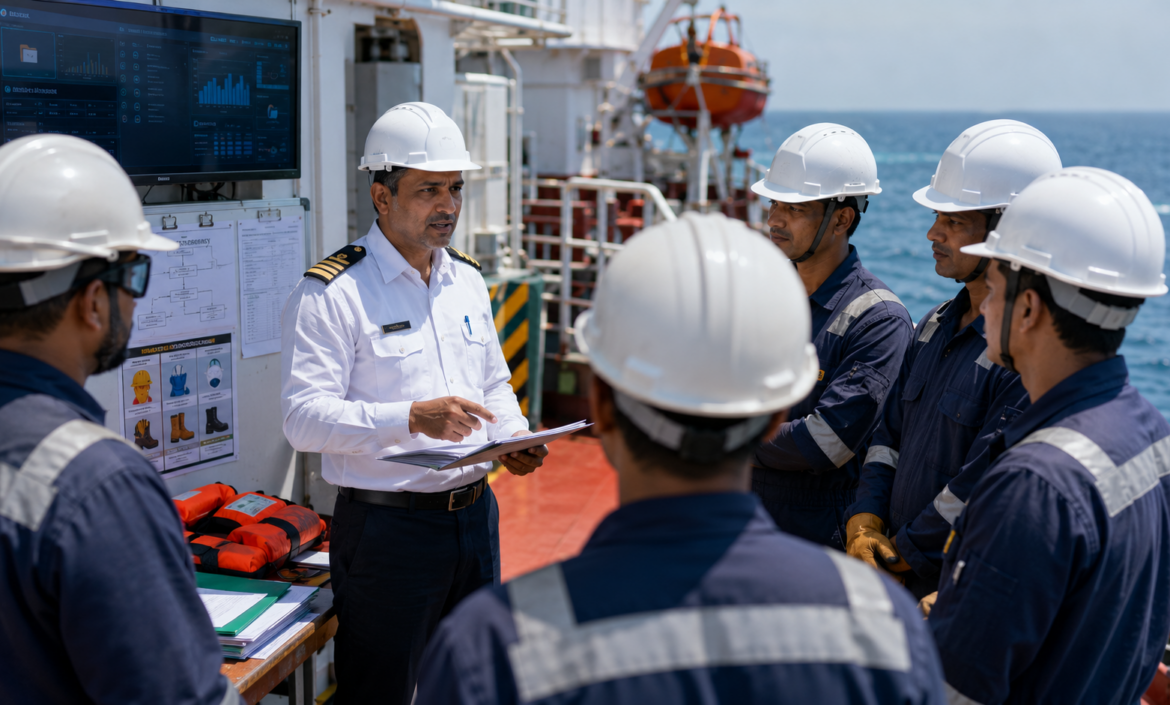
The course prepares maritime professionals to identify hazards, conduct risk assessments, support safety meetings, maintain safety records, investigate incidents and promote a strong safety culture onboard vessels.
Training covers the responsibilities of a Ship Safety Officer and important areas such as the International Safety Management (ISM) Code, Safety Management Systems (SMS), accident prevention, onboard inspections, incident investigation, human factors and safe working practices.
What Is a Ship Safety Officer Course?
A Ship Safety Officer Course trains maritime professionals to manage and support occupational health and safety responsibilities onboard a vessel.
It helps participants understand how to identify hazards, assess operational risks, conduct safety meetings, maintain records, investigate incidents and encourage crew members to follow safe working procedures.
The course is intended for officers, senior seafarers and maritime professionals who currently hold or may be assigned onboard safety responsibilities.
Course at a Glance
- Course name: Ship Safety Officer Course
- Training provider: AIMS Maritime
- Location: CBD Belapur, Navi Mumbai, Maharashtra
- Duration: 3 days
- Training focus: Onboard safety management and accident prevention
- Suitable for: Masters, officers, safety officers and senior maritime professionals
- Key subjects: SMS, risk assessment, audits, incident investigation and human factors
- Registration: Contact AIMS Maritime for the next batch and eligibility details
Course Overview
Maintaining safe working conditions onboard requires more than following written procedures. It requires continuous hazard identification, effective communication, accurate documentation and active participation from everyone onboard.
A Ship Safety Officer supports this process by helping implement company safety policies, conducting safety meetings, monitoring onboard working practices and encouraging crew members to report hazards, unsafe conditions, near misses and incidents.
The Ship Safety Officer Training at AIMS Maritime provides participants with a structured understanding of these responsibilities. It explains how safety-management procedures can be applied during everyday shipboard operations.
Participants learn how to evaluate risks, recommend appropriate control measures, maintain safety records, assist with inspections and investigate incidents to help prevent recurrence.
Course Standards and Guidance
The course content covers relevant principles and practices associated with:
- The International Safety Management (ISM) Code
- Shipboard Safety Management Systems
- Relevant STCW competence requirements
- The Code of Safe Working Practices for Merchant Seafarers
- Occupational health and safety onboard ships
- Marine incident and near-miss investigation principles
- Root-cause identification and corrective action
- Development of a positive onboard safety culture
Marine casualty and incident investigation topics draw on relevant principles addressed in IMO Model Course 3.11: Safety Investigation into Marine Casualties and Marine Incidents.
Course Objectives
After completing the course, participants should be able to:
- Understand the role and responsibilities of a Ship Safety Officer.
- Explain how a shipboard Safety Management System functions.
- Support the implementation of company safety policies and procedures.
- Identify hazards associated with shipboard activities.
- Conduct and document basic risk assessments.
- Recommend suitable risk-control measures.
- Organise and participate in onboard safety meetings.
- Support safety inspections and internal audits.
- Maintain safety records and documentation.
- Report accidents, incidents and near misses correctly.
- Apply basic incident-investigation and root-cause-analysis techniques.
- Recognise the influence of fatigue, stress and human factors on safety.
- Promote safety awareness and responsible behaviour among crew members.
What You Will Learn
Shipboard Safety Management
Participants receive an introduction to the systems, responsibilities and procedures used to manage safety onboard.
Topics include:
- Introduction to the ISM Code
- Purpose of a Safety Management System
- Company safety policies and procedures
- Role and responsibilities of the Ship Safety Officer
- Responsibilities of officers and crew members
- Implementation of shipboard safety procedures
- Safety documentation and record keeping
- Continuous improvement of onboard safety
Health and Safety Practices Onboard
This section explains how safe working principles can be applied during routine and non-routine shipboard activities.
Participants learn about:
- Occupational health and safety onboard vessels
- Principles of the Code of Safe Working Practices
- Safe systems of work
- Personal protective equipment
- Toolbox talks and pre-work safety discussions
- Permit-to-work procedures
- Hazardous shipboard activities
- Responsibilities for maintaining a safe workplace
Hazard Identification and Risk Assessment
Effective safety management begins with recognising hazards before they cause an accident.
Training covers:
- Difference between a hazard and a risk
- Common shipboard hazards
- Hazard-identification techniques
- Risk-assessment principles
- Evaluating likelihood and severity
- Selecting appropriate control measures
- Hierarchy of risk controls
- Recording and reviewing risk assessments
- Dynamic assessment of changing conditions
Accident and Incident Prevention
Participants learn how unsafe acts, unsafe conditions and weak procedures can contribute to accidents.
Topics include:
- Principles of accident prevention
- Recognising unsafe acts and conditions
- Importance of near-miss reporting
- Corrective and preventive actions
- Monitoring safety performance
- Learning from previous incidents
- Maintaining accident-prevention records
- Encouraging early reporting of safety concerns
Safety Meetings and Crew Awareness
A Ship Safety Officer helps keep safety visible and encourages crew participation.
This section covers:
- Planning effective safety meetings
- Preparing meeting agendas
- Recording observations and actions
- Following up on safety concerns
- Conducting toolbox talks
- Organising onboard safety campaigns
- Delivering safety-awareness programmes
- Using case studies and learning materials
- Encouraging crew participation
Safety Inspections and Audits
Regular inspections help identify hazards, equipment problems and procedural weaknesses.
Participants learn about:
- Preparing for shipboard safety inspections
- Conducting workplace observations
- Recognising non-conformities
- Recording inspection findings
- Supporting internal safety audits
- Recommending corrective actions
- Assigning responsibility for follow-up
- Monitoring the completion of corrective actions
Incident and Near-Miss Investigation
The purpose of an investigation is to understand what happened, identify contributing factors and prevent recurrence.
Training includes:
- Initial response following an incident
- Preserving relevant information
- Gathering facts and evidence
- Speaking with personnel involved
- Identifying immediate and underlying causes
- Basic root-cause-analysis techniques
- Preparing an incident report
- Developing corrective and preventive actions
- Communicating lessons learned
Human Factors and Safety Culture
Human performance can be affected by workload, fatigue, stress, communication and working conditions.
This section covers:
- Human factors in maritime operations
- Fatigue and its effect on performance
- Stress management onboard
- Communication and teamwork
- Situational awareness
- Decision-making under pressure
- Leadership and safety behaviour
- Developing a positive reporting culture
- Building continuous safety awareness onboard
Why Is Ship Safety Officer Training Important?
Shipboard operations involve machinery, enclosed spaces, working at height, cargo operations, electrical systems and many other occupational hazards.
Effective safety management helps reduce accidents, protect crew members, prevent operational disruption and support compliance with company procedures.
Professional Ship Safety Officer training helps maritime personnel:
- Recognise hazards before an incident occurs.
- Evaluate and control shipboard risks.
- Improve accident and near-miss reporting.
- Conduct more effective safety meetings.
- Maintain accurate safety documentation.
- Support inspections and audits.
- Investigate incidents systematically.
- Promote greater crew participation in safety.
- Strengthen the vessel’s overall safety culture.
Who Should Attend?
The Ship Safety Officer Course is suitable for maritime professionals who hold, support or may be assigned onboard safety-management responsibilities.
This includes:
- Masters
- Chief Officers
- Deck Officers
- Chief Engineers
- Engine Officers
- Designated Ship Safety Officers
- Senior Maritime Professionals
- Superintendents and shore-based marine personnel
- Seafarers responsible for onboard safety activities
Candidates should contact AIMS Maritime to confirm the current eligibility requirements and documents needed for registration.
Why Choose AIMS Maritime?
AIMS Maritime provides professional maritime training focused on practical knowledge, responsible shipboard performance and safety-conscious decision-making.
The Ship Safety Officer Course combines structured instruction with operational examples, discussions and safety case studies to help participants understand how safety principles apply onboard.
Benefits of Training with AIMS Maritime
- Experienced maritime instructors
- Three-day structured training programme
- Industry-focused safety education
- Case-study-based learning
- Practical risk-assessment guidance
- Focus on incident and near-miss prevention
- Coverage of safety meetings, audits and documentation
- Professional maritime training environment
- Convenient location in CBD Belapur, Navi Mumbai
Course Duration
The Ship Safety Officer Course duration is 3 days.
Contact AIMS Maritime to confirm:
- Upcoming batch dates
- Daily course timings
- Training delivery mode
- Eligibility requirements
- Required documents
- Assessment method
- Certification details
- Course fee and registration procedure
Training Location
The course is conducted by AIMS Maritime in CBD Belapur, Navi Mumbai, making it accessible to maritime professionals from Mumbai, Navi Mumbai and nearby areas.
Training centre address:
103/104, 10th Floor, B-Wing
Agarwal Trade Center, Sector 11
CBD Belapur, Navi Mumbai – 400614
Maharashtra, India
Frequently Asked Questions
What is a Ship Safety Officer Course?
A Ship Safety Officer Course teaches maritime professionals how to support onboard safety management, identify hazards, conduct risk assessments, maintain records, investigate incidents and promote safe working practices.
How long is the Ship Safety Officer Course at AIMS Maritime?
The Ship Safety Officer Course at AIMS Maritime is a 3-day training programme. Contact the institute for current batch dates and daily timings.
Who should attend this course?
The course is suitable for Masters, Chief Officers, Deck Officers, Engine Officers, designated safety officers and senior maritime professionals responsible for onboard safety management.
What topics are covered?
The course covers the ISM Code, Safety Management Systems, safe working practices, risk assessment, accident prevention, safety meetings, inspections, audits, incident investigation, human factors and safety culture.
Does the course cover accident investigation?
Yes. Participants are introduced to incident and near-miss reporting, evidence gathering, identification of contributing factors, root-cause analysis and corrective actions.
Is Ship Safety Officer the same as Ship Security Officer?
No. A Ship Safety Officer focuses on occupational safety, hazard prevention, risk management and safe working practices onboard.
A Ship Security Officer has separate responsibilities related to the Ship Security Plan and the requirements of the ISPS Code. Candidates should confirm that they are registering for the correct course.
Is this an IMO Model Course 3.11?
IMO Model Course 3.11 specifically addresses safety investigations into marine casualties and marine incidents. The Ship Safety Officer course covers relevant incident-investigation principles together with wider shipboard safety-management responsibilities.
Contact AIMS Maritime for complete information about the course’s recognition, certification and applicable standards.
Where is the course conducted?
The course is conducted at AIMS Maritime in CBD Belapur, Navi Mumbai, Maharashtra.
How can I register?
Contact AIMS Maritime by telephone or email to confirm eligibility, upcoming batches, documents, fees and the registration process.
Enquire About the Next Batch
Strengthen your knowledge of shipboard safety management, risk assessment, incident prevention and safety leadership with the 3-day Ship Safety Officer Course at AIMS Maritime.
Contact the institute for upcoming batch dates, eligibility, certification details and registration assistance.
Call: +91 7710074140
Email: training@aimsmaritimeplus.com
Website: https://aimsmaritime.com/