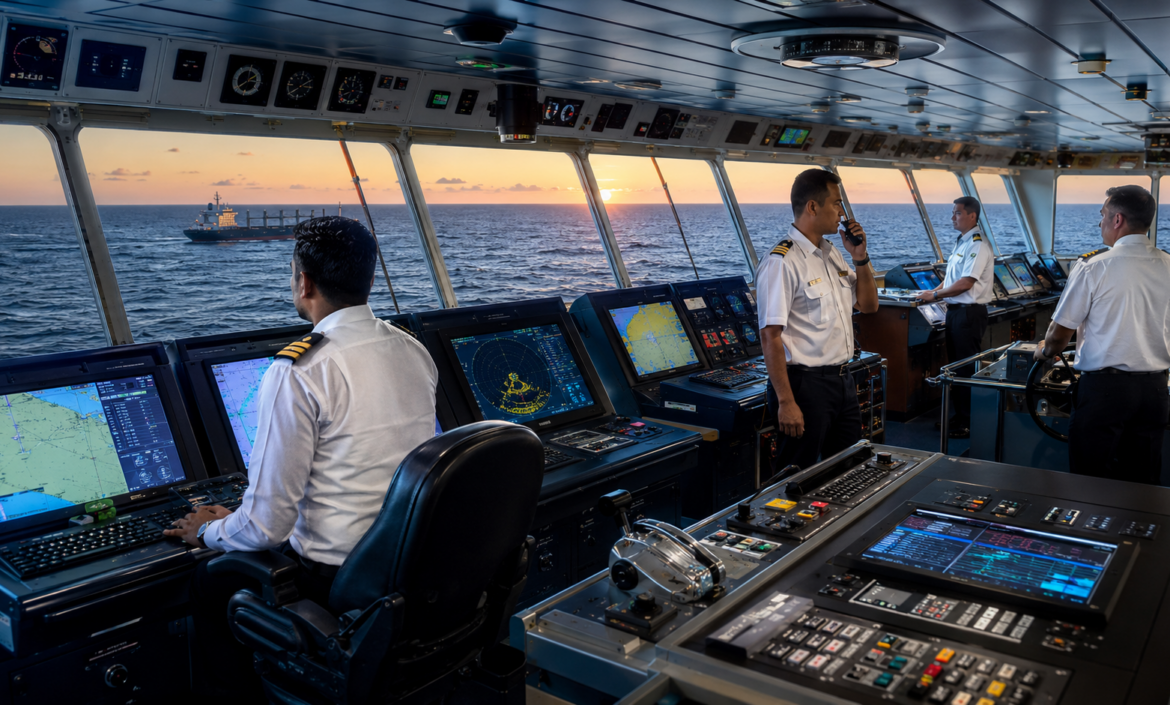
Bridge Resource Management (BRM) Course in Mumbai
Develop the skills to coordinate people, equipment and navigational information with the Bridge Resource Management Course in Mumbai at AIMS Maritime.
The program focuses on leadership, communication, situational awareness, workload allocation and decision-making. Participants learn how effective resource management supports bridge operations during routine navigation, demanding situations and emergencies.
Designed for deck personnel, the course connects BRM principles with the responsibilities of planning, executing and monitoring a voyage.
What Is Bridge Resource Management?
Bridge Resource Management (BRM) is the effective use of available bridge resources—including personnel, equipment, information and procedures—to support safe navigation.
BRM training helps navigating officers understand how human factors, communication and workload influence operational decisions. It encourages bridge teams to share information, recognise developing risks and coordinate their actions.
Course at a Glance
| Course detail | Information |
|---|---|
| Course name | Bridge Resource Management (BRM) |
| Training provider | AIMS Maritime |
| Location | Mumbai, India |
| Core focus | Effective use of personnel, equipment, information and procedures |
| Key skills | Leadership, communication, situational awareness and decision-making |
| Intended participants | Deck cadets, navigating officers, Chief Officers and Masters |
| Duration and batch dates | Contact AIMS Maritime |
Course Overview
Bridge personnel must manage several demands at once: monitor navigational conditions, interpret information, communicate clearly and carry out assigned tasks. Effective resource management helps the team maintain an organised response as these demands change.
The BRM Course at AIMS Maritime examines the human and operational factors involved in these responsibilities. Participants explore how workload, leadership, information sharing and team coordination affect bridge performance.
Training covers passage planning, voyage execution, watchkeeping, threat and error management, and emergency response. The emphasis is on recognising risks and making informed decisions using the resources available.
What You Will Learn
BRM Principles and Human Factors
Understand how individual actions and team behaviour influence bridge operations.
Topics include:
- Introduction to Bridge Resource Management
- Human factors in maritime operations
- Relationship between communication, workload and performance
- Recognition of potential human errors
- The role of procedures in supporting safe operations
Bridge Organisation and Leadership
Explore how leadership and clear responsibilities support an effective bridge team.
Topics include:
- Bridge team organisation
- Leadership during navigational operations
- Coordination of personnel and responsibilities
- Encouraging relevant information sharing
- Maintaining a shared understanding of operational priorities
Workload and Resource Allocation
Learn how bridge resources can be organised to meet changing operational demands.
Topics include:
- Identifying available personnel, equipment and information
- Allocating tasks and responsibilities
- Recognising competing demands
- Reviewing workload as conditions change
- Coordinating resources during challenging situations
Communication and Information Sharing
Develop an understanding of how clear communication supports sound decisions.
Topics include:
- Communication between bridge personnel
- Sharing navigational information
- Confirming a common understanding of plans
- Reporting concerns and uncertainties
- Maintaining coordination under pressure
Passage Planning and Voyage Execution
Consider how BRM principles apply throughout planning and navigation.
Topics include:
- Passage planning and preparation
- Communicating the voyage plan
- Coordination during voyage execution
- Monitoring progress and changing conditions
- Assessing when plans and priorities need review
Situational Awareness and Risk Assessment
Learn to build and maintain an understanding of the navigational situation.
Topics include:
- Gathering and interpreting available information
- Recognising changes in operating conditions
- Identifying navigational threats
- Assessing risks
- Sharing observations within the bridge team
Decision-Making and Threat Management
Explore how officers evaluate information and respond to operational challenges.
Topics include:
- Decision-making during routine navigation
- Evaluating options under pressure
- Recognising threats and errors
- Considering the consequences of decisions
- Reviewing decisions as new information becomes available
Watchkeeping and Navigational Equipment
Understand how personnel and equipment contribute to effective watchkeeping.
Topics include:
- Bridge watchkeeping practices
- Use of navigational equipment and systems
- Interpretation and sharing of equipment information
- Bridge procedures and operational safety
- Coordination between monitoring and other bridge duties
Emergency Response
Learn how leadership, communication and resource allocation support a coordinated emergency response.
Topics include:
- Recognising emergency conditions
- Establishing operational priorities
- Allocating available resources
- Coordinating bridge personnel
- Maintaining communication and situational awareness
Learning Outcomes
After completing the training, participants should be better able to:
- Apply BRM principles to navigational responsibilities.
- Coordinate bridge resources and assigned tasks.
- Communicate operational information clearly.
- Recognise workload pressures and changing priorities.
- Maintain situational awareness.
- Assess navigational risks.
- Use equipment and information to support decisions.
- Demonstrate leadership and team coordination.
- Recognise threats and potential errors.
- Support an organised response during bridge emergencies.
Who Should Attend?
The course is suitable for:
- Deck Cadets
- Junior Deck Officers
- Officers in Charge of a Navigational Watch (OICNW)
- Chief Officers
- Masters
- Navigating officers seeking professional development
Contact AIMS Maritime to confirm the entry requirements and suitability of the programme for your experience and intended duties.
Why Choose AIMS Maritime?
AIMS Maritime provides professional maritime training that connects technical knowledge with onboard responsibilities.
Experienced maritime instructors guide participants through the principles of bridge leadership, communication and resource management. The course focuses on understanding operational challenges and applying a structured approach to decisions.
Training features include:
- Industry-focused maritime instruction
- Experienced marine professionals as instructors
- Practical application of BRM principles
- Coverage of human factors and resource allocation
- Emphasis on teamwork and navigational safety
- A professional learning environment
Course Duration and Registration
Contact AIMS Maritime for the course duration, upcoming batches and daily timings.
The training team can provide details about the delivery method, entry requirements, assessment, certification, course fees and documents needed for registration.
Frequently Asked Questions
What does BRM stand for?
BRM stands for Bridge Resource Management. It concerns the effective use of personnel, equipment, information and procedures to support safe bridge operations.
What does the BRM course cover?
The course covers human factors, leadership, communication, workload allocation, passage planning, situational awareness, watchkeeping, threat and error management, and emergency response.
Who should attend BRM training?
The course is suitable for deck cadets, navigating officers, Chief Officers and Masters seeking to strengthen their bridge resource-management skills.
Why is workload allocation part of BRM?
Workload allocation helps bridge personnel understand their responsibilities and coordinate tasks as operational demands change. It supports effective use of the team and available resources.
How does BRM support navigational decision-making?
BRM encourages officers to share relevant information, assess risks and consider available resources before making decisions. It also emphasises reviewing decisions when conditions change.
Does the course cover emergency response?
Yes. Emergency response is included, with attention to leadership, priorities, communication and resource coordination.
Does BRM training include navigational equipment?
The syllabus covers effective use of navigational equipment as a bridge resource. Contact AIMS Maritime for details of the equipment, exercises and training facilities used in the programme.
How long is the course?
Contact AIMS Maritime for the current course duration and batch schedule.
Where can I attend BRM training in Mumbai?
The Bridge Resource Management Course is available at AIMS Maritime in Mumbai, India.
How can I register?
Call or email AIMS Maritime to confirm eligibility, batch availability, course fees and registration requirements.
Enquire About the Next BRM Batch
Strengthen your approach to bridge leadership, resource allocation and navigational decision-making with AIMS Maritime.
Contact the training team for upcoming batches and course details.
Call: +91 7710074140
Email: training@aimsmaritimeplus.com
Website: AIMS Maritime